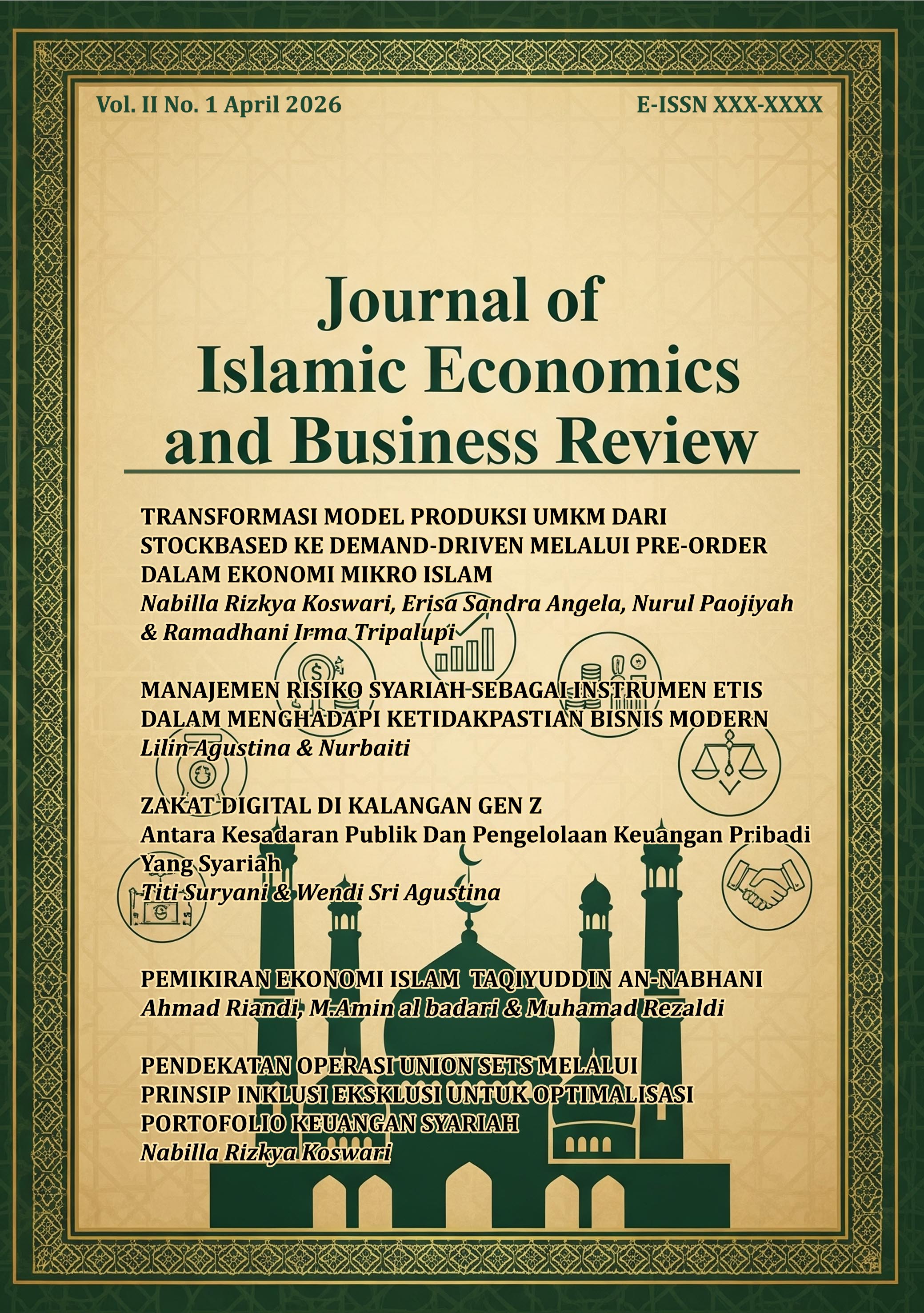
ZAKAT DIGITAL DI KALANGAN GEN Z
Antara Kesadaran Publik Dan Pengelolaan Keuangan Pribadi Yang Syariah
Keywords:
zakat digital, Generasi Z, kesadaran publik, pengelolaan keuangan syariah, fintech, Keywords: digital zakat, Generation Z, public awareness, Islamic financial management, fintechAbstract
This study aims to analyze the position of digital zakat within the context of public awareness and Sharia-compliant personal financial management among Generation Z (Gen Z) in Indonesia. Employing a qualitative library research approach, the study examines literature on the integration of financial technology (fintech) in zakat fundraising and the condition of Islamic financial literacy among Gen Z. The findings indicate that digital zakat has enhanced the participation of young people through ease of access, transparency, and service personalization that align with their digital lifestyle. However, the high adoption of technology does not yet fully reflect a deep public awareness of the zakat obligation as an integral part of Sharia-compliant personal financial management. The Islamic financial literacy index, which reached only 39.11% in 2024, points to a persistent gap between the convenience of digital transactions and understanding of the underlying religious principles. Therefore, integrated, innovative, and contextually relevant educational strategies tailored to Gen Z’s characteristics are necessary—such as the development of interactive applications, creative content, and synergy with influencers—so that digital zakat becomes not merely a payment channel, but an instrument for shaping Sharia-obedient financial behavior.
References
Badan Pusat Statistik. Indeks Pembangunan Teknologi Informasi dan Komunikasi 2023. Jakarta: BPS, 2024.
BAZNAS. Laporan Pengelolaan Zakat Nasional Tahun 2023. Jakarta: BAZNAS, 2024.
Fuad, Lian, Zainal Alim, dan Abdul Hakim. “Integrasi Teknologi Financial (Fintech) dalam Fundraising Zakat di Indonesia.” Al-Wajih: The Journal of Islamic Studies 2, no. 1 (2025): hlm. 1–15. (Sesuaikan halaman jika diketahui)
Luntajo, M. M. R., dan F. Hasan. “Optimalisasi Potensi Pengelolaan Zakat di Indonesia melalui Integrasi Teknologi.” Al-’Aqdu: Journal of Islamic Economics Law 3, no. 1 (2023): hlm. 15–30.
Miles, Matthew B., A. Michael Huberman, dan Johnny Saldaña. Qualitative Data Analysis: A Methods Sourcebook. Edisi ke-3. Thousand Oaks: SAGE Publications, 2014.
Nasution, J. “Strategi Digital Fundraising Zakat di Indonesia.” Jurnal Edukasi (Ekonomi, Pendidikan dan Akuntansi) 10, no. 2 (2022): hlm. 165–175.
Otoritas Jasa Keuangan, dan Badan Pusat Statistik. Survei Nasional Literasi dan Inklusi Keuangan Tahun 2024. Jakarta: OJK & BPS, 2024.
Otoritas Jasa Keuangan. Laporan Perkembangan Keuangan Syariah Indonesia 2023. Jakarta: OJK, 2023.
Ramadhani, Bagas Noval, dan Wahyu Wibowo. “Membangun Generasi Z Melek Keuangan Syariah: Peluang, Tantangan, Strategi, dan Inovasi.” Journal of Economic Research 1, no. 2 (2025): hlm. 85–95.
Ridho, H., A. Sodiqin, dan A. Mujib. “The Evolution of Islamic Philanthropy in Indonesia’s Digital Age (2016-2023).” Al-Ahkam 35, no. 1 (2025): hlm. 1–20.
Sugiyono. Metode Penelitian Kuantitatif, Kualitatif, dan R&D. Bandung: Alfabeta, 2019.
Wahyudi, R., dan D. S. Pambudi. “Digital Zakat Payment: User Experience of Islamic Bank in Indonesia.” At-Taqaddum 14, no. 2 (2022): hlm. 60–75.
Zed, Mestika. Metode Penelitian Kepustakaan. Jakarta: Yayasan Pustaka Obor Indonesia, 2014.
Downloads
Published
Issue
Section
License
Copyright (c) 2026 Journal of Islamic Economics and Business Review (JIEBR)

This work is licensed under a Creative Commons Attribution-NonCommercial 4.0 International License.