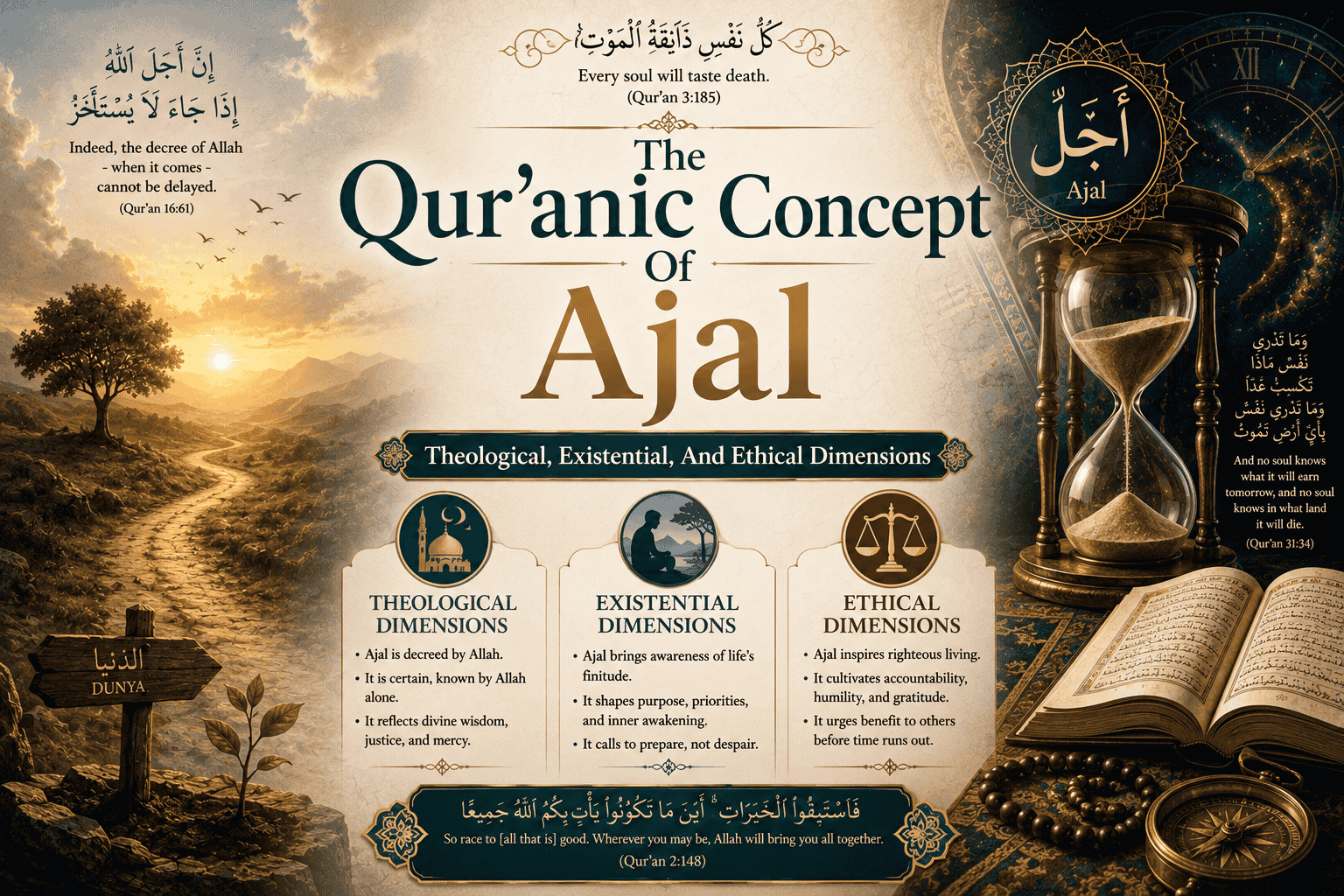
Qur'anic Concept Of Ajal; Teological, Existential, And Ethical Dimensions
DOI:
https://doi.org/10.32520/dgd9jr48Kata Kunci:
Keywords: Ajal; Qur’an; Mortality; Thematic Interpretation; Divine decree.Abstrak
Abstract
This study explores the Qur’anic concept of ajal (appointed term), a notion often misunderstood or oversimplified in contemporary discourse. The research addresses three key questions: (1) What is the essential meaning of ajal in the Qur’an? (2) How is its existential reality portrayed? and (3) What are its theological and ethical significances? Using a qualitative, library-based method with thematic interpretation (tafsīr mawḍū‘ī) and content analysis, the study synthesizes insights from the Qur’an and exegetical works. The findings reveal that: (1) etymologically, ajal denotes a divinely determined limit, covering human life, contracts, and temporal events; (2) existentially, ajal is inevitable, neither hastened nor delayed; and (3) Qur’anic discourse on ajal carries five major implications: (a) the value of time, urging responsibility and timely action; (b) the transience of blessings and hardships, fostering gratitude and resilience; (c) theological and ethical dimensions, affirming divine eternity and human accountability; (d) spirituality and eschatological awareness, nurturing preparedness for the Hereafter; and (e) social ethics and justice, inspiring fairness, compassion, and integrity. Overall, this research contributes to Qur’anic studies by offering a comprehensive thematic understanding of ajal, bridging theological reflection with existential, ethical, spiritual, and social dimensions of human temporality.
Referensi
Ahmad, N., & Hamid, S. (2019). Temporal Reflections in Qur’anic Ethics. Kuala Lumpur: IIUM Press.
Ajirni, Ajirni, and Syukran Abu Bakar. “Kematian Dalam Al-Qur’an.” TAFSE: Journal of Qur’anic Studies 1, no. 1 (2016): 34. https://doi.org/10.22373/tafse.v1i1.14275.
Artanty, Atika Heny. “Konsep Maut Dalam Al-Qur’an (Kajian Semantik).” Skripsi ,Fakultas Ushuluddin Dan Pemikiran Islam UIN Sunan Kalijaga Yogyakarta, 2016. https://digilib.uin-suka.ac.id/id/document/437224.
Aṣfahānī. Al-Rāghib. Mufradāt Alfāẓ al-Qur’ān. Beirut: Dār al-Qalam, 1992.
‘Asyur. Muhammad Tahir Ibn. al-Tahrir wa al-Tanwir, Jilid VII, (Tunisia: Dar Sahnun li an-Nasyr wa al-Tawzi’, t.t)
Badrun, Muhammad, Alhafidh Nasution, Azizatul Afini, and Evi Nurdiana. “The Basic Structure of Qur’anic Worldview: An Analysis to Toshihiko Izutsu Concept of Weltanschauung.” Al-Quds; Jurnal Studi Alquran Dan Hadis 7 (2023): 191–208. https://doi.org/10.29240/alquds.v7i1.5696.
Fāris, Aḥmad Ibn. Maqāyīs al-Lughah. Cairo: Dār al-Fikr, 1439 H.
Hakim. Abu Abdullah an-Naisaburi. al-Mustadrak ala as-Sahihaeni, (Beirut: Dar al-Kutub al-Ilmiyah, 1990 M.
Lis Safitri, Muhammad Chirzin. “The Message o f The Qur’ā n Karya Muhammad Asad: Kajian Metodologi Terjemah Dan Tafsir.” MAGHZA: Jurnal Ilmu Al-Qur’an Dan Tafsir 4, no. 2 (2019): 177–92. https://doi.org/10.24090/maghza.v4i2.3349.
Mahmudi. “Scientia Sacra On Philosophy Of Science Perspective And Its Relevance To Discourse Of Scientific Integration.” Cendekia 18, no. 2 (2020): 333–49.
Manẓūr, Muḥammad Ibnu. Lisān al-‘Arab. Cairo: Dār Ṣādir, 1968.
Maria Ulfa, Ahmad Hisyam Syamil. “The Concept of Morality According to Fazlur Rahman.” Tasfiyah; Jurnal Pemikiran Islam 7, no. 1 (2023): 87–110.
Quraish Shihab, M. Tafsir al-Misbah: Pesan, Kesan dan Keserasian al-Qur’an. Jakarta: Lentera Hati, 2007.
Qurṭubī, Muḥammad ibn Aḥmad. Al-Jāmi‘ li-Aḥkām al-Qur’ān. Beirut: Dār al-Kutub al-‘Ilmiyyah, 2006.
Setiadi, Ozi. “Kematian Dalam Prespektif Al-Quran.” Alashriyyah 6, no. 01 (2020): 45–61. https://doi.org/10.53038/alashriyyah.v6i01.126.
Tabrani, Sulaiman bin Ahmad. Al-Mu’jam al-Awsat, Juz VI. Kairo: Dar-Haramain, 1415.
Unduhan
Diterbitkan
Terbitan
Bagian
Lisensi
Hak Cipta (c) 2026 Syahadah: Jurnal Ilmu Al-Qur'an dan Keislaman

Artikel ini berlisensi Creative Commons Attribution-NonCommercial 4.0 International License.