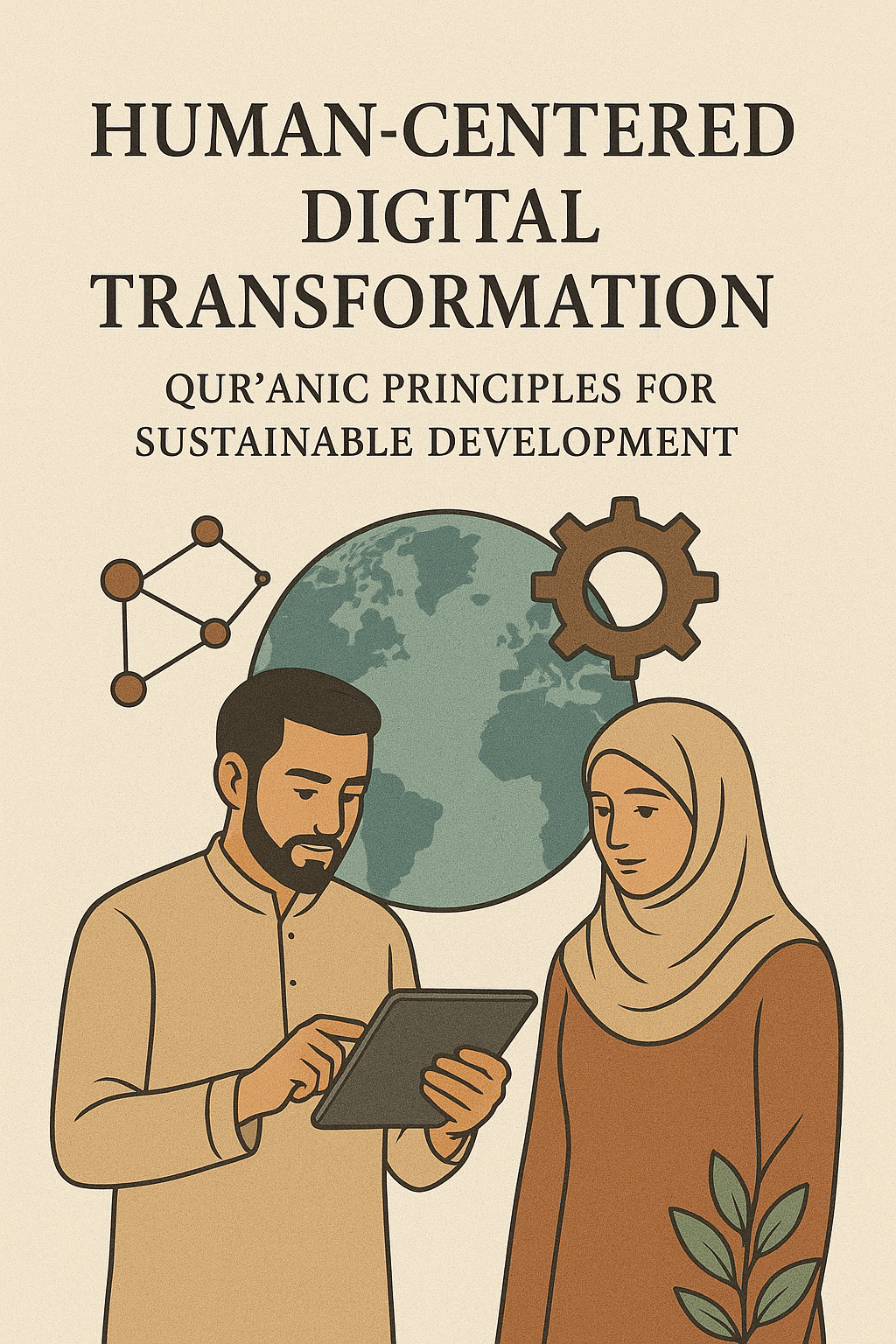
HUMAN, CENTRED HUMAN-CENTERED DIGITAL TRANSFORMATION : A QUR'ANIC PERSPECTIVE FOR SUSTAINABLE CIVILIZATION
HUMAN-CENTERED DIGITAL TRANSFORMATION : A QUR'ANIC PERSPECTIVE FOR SUSTAINABLE CIVILIZATION
Abstract
Abstract Digital transformation within the framework of Society 5.0 demands a paradigm shift from mere technological efficiency to human-centered orientation. In the Islamic perspective, the Qur'an provides an ethical and normative foundation that can be a guide in directing technological development to remain in harmony with human values and the sustainability of civilization. This research aims to analyze the relevance of Qur'anic principles, particularly maqāṣid al-syarī'ah, in formulating a human-centered digital transformation framework. The research method uses a qualitative-descriptive approach based on library research, with thematic analysis of Qur'anic verses related to benefit, social justice (al-'adl), trust, and ecological responsibility. Primary data comes from Qur'anic texts and classic and contemporary tafsir, while secondary data includes current academic literature related to digital ethics and sustainability. The results show that Qur'anic values are able to provide a conceptual framework for digital transformation that prioritizes human benefits, maintains a balance between innovation and ethics, and integrates the principles of justice, mercy (al-raḥmah), and trust in technology management. The application of these values can mitigate the risk of dehumanization due to technological disruption, while strengthening social and ecological resilience in the long run. The discussion confirms that the human-centered digital transformation paradigm in the Qur'anic perspective is not only reactive to technological developments, but proactive in shaping the direction of policy, education, and innovation to be in line with the vision of sustainable humanity. The practical implications of this research include recommendations for the integration of maqāṣid al-syarī'ah principles in digital policy design and Qur'anic value-based technology development.